Norwich Science Festival 2023
Norwich Science Festival is nationally recognised and showcases groundbreaking research, tech and innovation in Norfolk. This year the festival took place from 11th-18th February 2023 and we had the pleasure of taking part!
Food and Farming Day
Sunday 12th February was Food and Farming Day at Norwich Science Festival. We took part in the FFDT mobile classroom with interactive activities allowing young people to explore the topics of food miles, seasonality and local produce. The aim was to get young people thinking about local agriculture and what is going on around them.
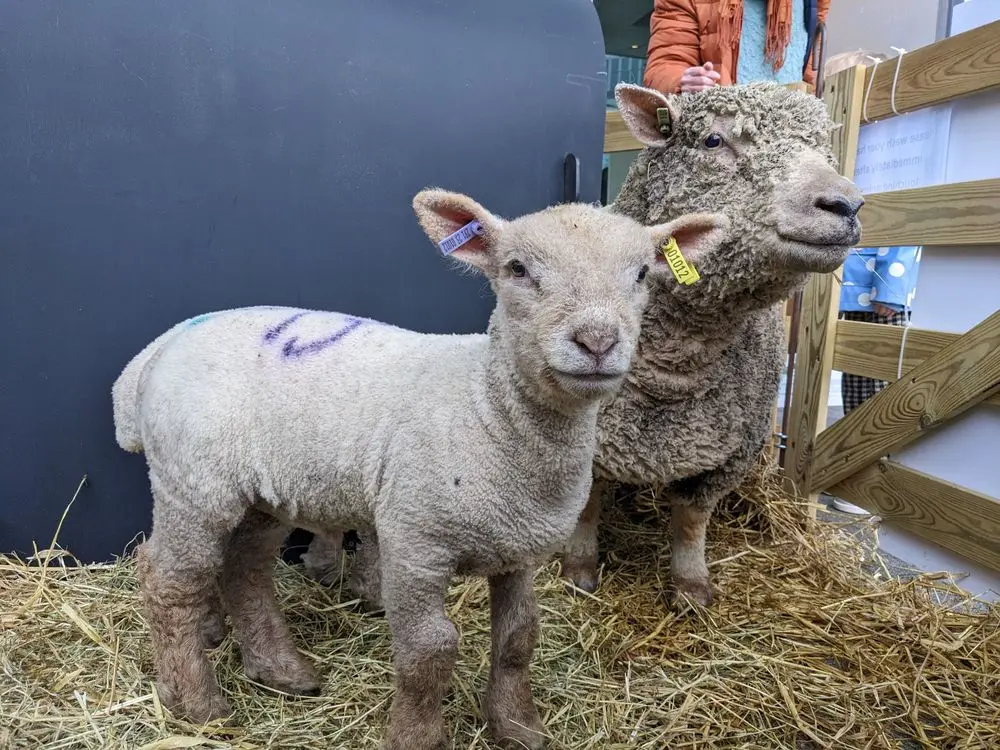
We were also joined by our wonderful Advisory Group member and member of the Rare Breeds Survival Trust, Gail Sprake. Gail brought along some very special guests… a Southdown ewe and her three week old lambs! They were hugely popular with visitors young and old and we got some brilliant questions from curious minds. Gail also gave a talk later in the day on native sheep breeds and their adaptations to different habitats in the UK.
Did you know there is a sheep breed called the North Ronaldsay that lives on a diet of seaweed! The North Ronaldsay is still mainly found on its native island, the northernmost of the Orkneys.
Straight Up Farming
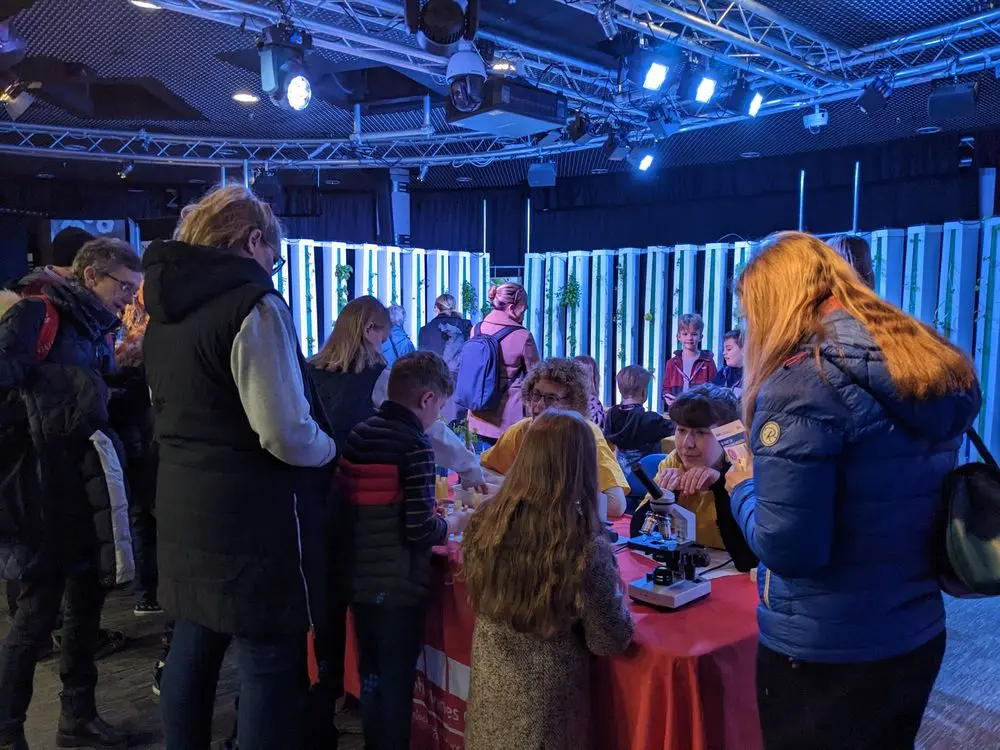
On Monday 13th, Wednesday 15th and Friday 17th, we provided activties as part of the John Innes Centre’s Vertical Farming Exhibit. With the backdrop of an amazing aeroponic vertical farming system, this was a real treat for visitors. Aeroponic means that the plants were growing without any soil and the roots were instead being misted with a mixture of water and nutrients to allow them to grow. The system was provided by the company Aponic in Suffolk and is mainly used to grow salad leaves and herbs, but can also be used for strawberries and even tomatoes too.
Visitors had the chance to learn about plant structure and the functions of different parts of plants, before exploring the idea that plants can grow without soil. There was even some cress seed to take away so visitors could have a go at growing their own plants without soil. Microscopes were also set up to allow visitors to take a look inside some actual plant stems.